
CO is odourless, colourless and silent. A blocked or poorly maintained chimney is one of the most common causes of carbon monoxide risk in the home.
Carbon monoxide is produced by incomplete combustion — when a fire does not burn properly because it is not getting enough air, or because flue gases cannot escape correctly. It is odourless, colourless and impossible to detect without an alarm.
A blocked or restricted chimney flue traps CO inside the property instead of venting it to the outside. Symptoms include headaches, nausea, dizziness and confusion — often mistaken for flu.
If your CO alarm sounds — ventilate and evacuate immediately.
Book an Inspection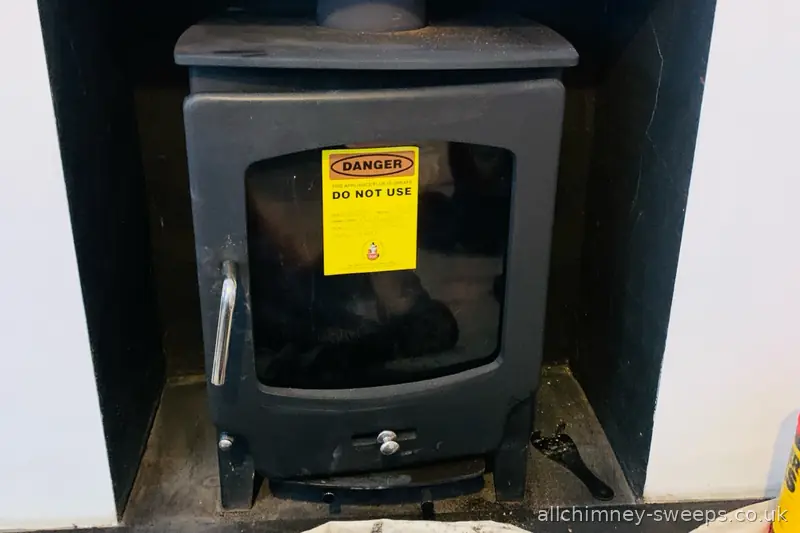
DANGER DO NOT USE notice affixed during NACS sweep inspection — appliance deemed unsafe for use, Upminster. Remedial works required before lighting.
Bird nests, debris, cobwebs and fallen render can partially or fully block a flue. Even a partial blockage restricts draw and allows CO to spill back into the room.
Burning green or unseasoned wood produces incomplete combustion, excessive tar and creosote buildup, and significantly higher CO output. Wood must be seasoned for a minimum of two years.
A cracked or deteriorated flue liner allows CO to seep into the fabric of the building. CCTV survey or smoke test will identify liner failure before it becomes dangerous.
Soot and tar buildup narrows the flue, restricts airflow and increases CO risk with every use. Annual sweeping is not optional — it is a safety requirement.
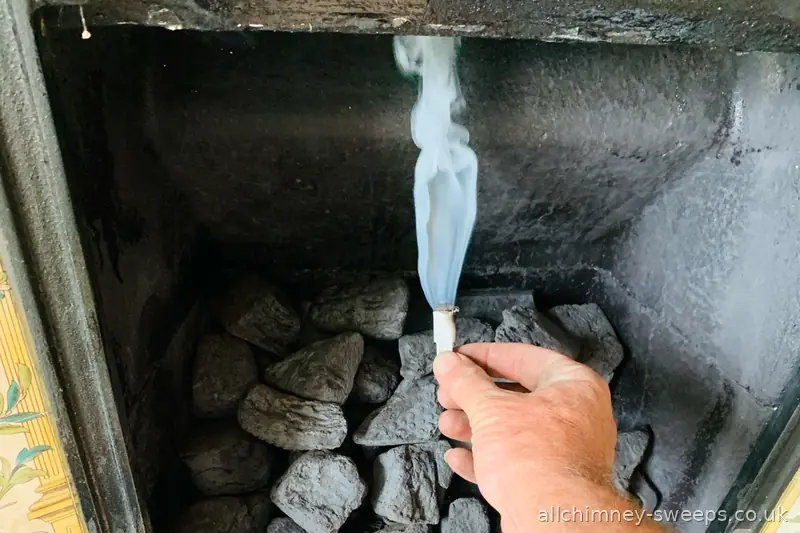
Smoke draw test on GFE appliance — Building Regulations Part J spillage and evacuation test, Emerson Park. Required annually by most home insurers on solid fuel appliances.
Since October 2022, carbon monoxide alarms are mandatory in any room with a solid fuel burning appliance in England. This is a legal requirement under the Smoke and Carbon Monoxide Alarm Regulations.
The alarm must be installed, tested and in working order. A standard sweep inspection confirms your appliance is safe to use and your flue is drawing correctly.
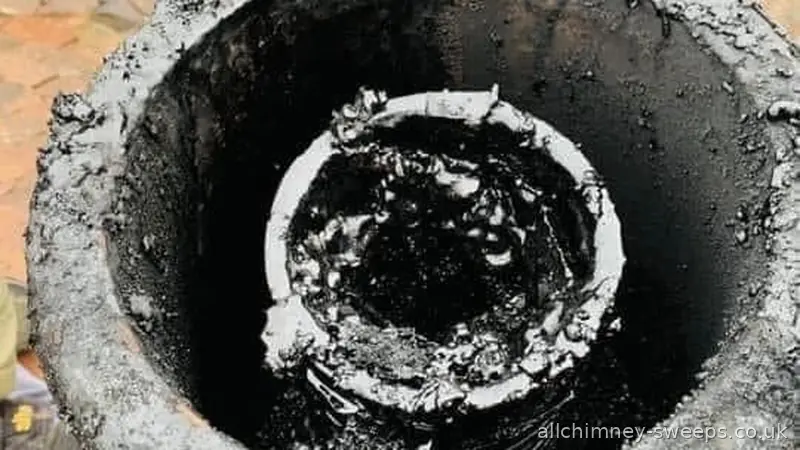
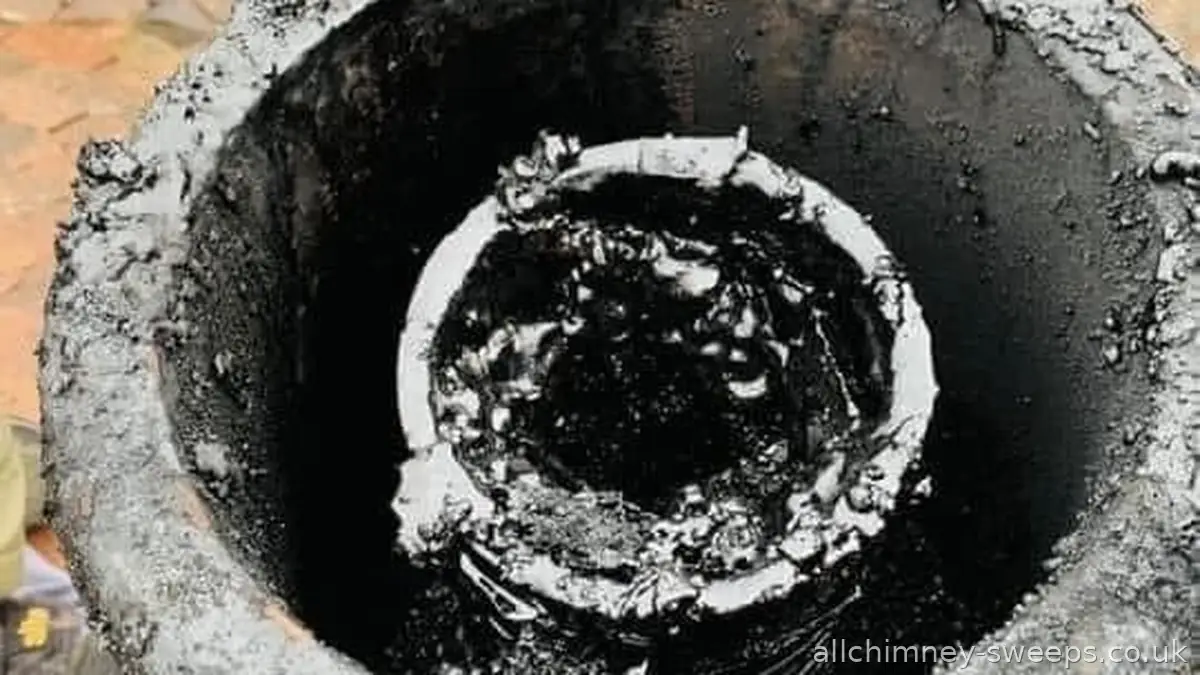
Creosote and tar coating 125mm flue liner — green wood burning, Harold Wood. Incomplete combustion narrows the flue gradually. Annual sweeping catches this before it ignites.
This 125mm flexible flue liner is choked with creosote and tar — caused entirely by burning unseasoned green wood. The homeowner in Harold Wood had no idea the flue was in this condition. The stove was drawing poorly, but they assumed it was normal.
It was not normal. Wet wood with high moisture content does not burn correctly. The heat energy that should be generating warmth is instead used to evaporate the water from the fuel. This reduces full combustion, produces black smoke and unburned particles, and pushes partially burned gases up the flue. The result is heavy soot deposits on the liner walls — or in worse cases a thick black tar and creosote-type substance that clings to the chimney walls, gradually narrows the flue, and is highly combustible. Left unchecked it either blocks the flue completely or ignites — a chimney fire.
Wood must be dried and seasoned for a minimum of two years before burning. Wet or green wood produces incomplete combustion, excessive tar deposits and significantly higher carbon monoxide output. Look for the Ready to Burn logo when buying logs. Only use kiln-dried or properly seasoned hardwood in your stove or open fire.
Burn dry. Sweep annually. Stay safe.
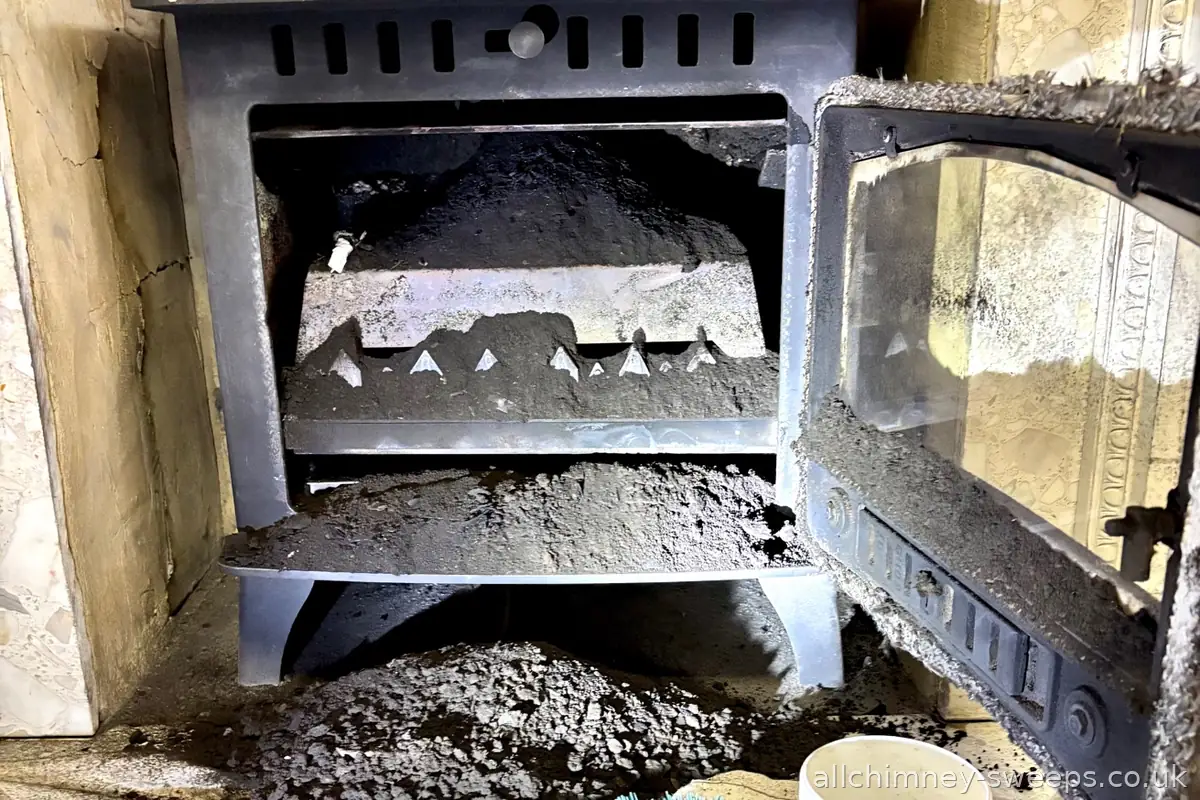
Book an InspectionThis wood burning stove had not been swept for four years. Heavy soot accumulation, poor draw and smoke spillage back into the room. A serious CO and chimney fire risk — and the occupants had been using it every winter.
Annual sweeping is not optional. It is a safety requirement. Every year that passes without a sweep, soot and tar narrow the flue and increase the risk of both CO exposure and chimney fire. The NACS certificate issued at the end of a sweep is your confirmation that the flue is clear and drawing correctly.
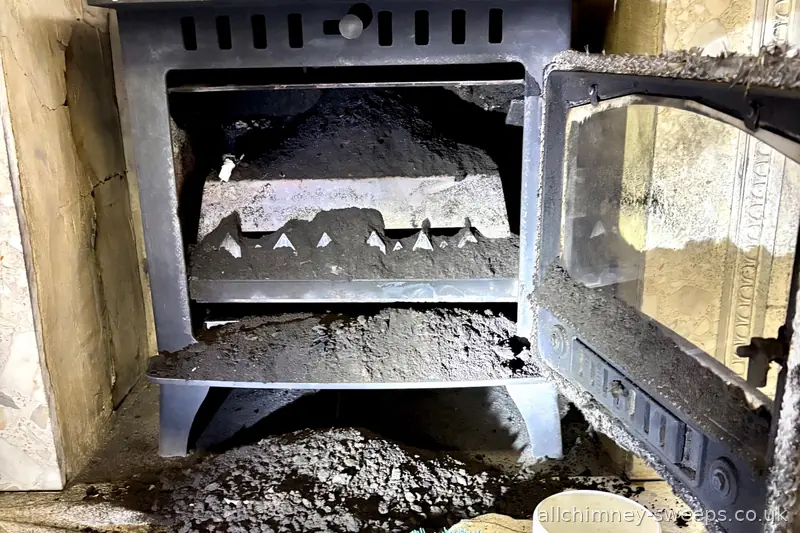
Four years without a sweep — soot accumulation reducing flue diameter, restricting draw and raising CO output, East London. Every winter without a sweep compounds the risk.
This DANGER DO NOT USE warning notice was affixed during a NACS sweep inspection in Upminster. The appliance and flue were deemed unsafe for use until remedial works were completed.
When an inspection reveals a safety issue we issue a warning notice and clearly explain what remedial action is required. Common issues identified during inspection include:
Your safety is our priority. The appliance stays out of use until it is safe. We provide a written condition report on every inspection — clear findings, required remedial works, and confirmation of next steps.
Decades of trade knowledge — we spot what others miss before it becomes a safety issue.
Flue InspectionsGeneral positioning guidelines: within 200mm of ceiling, between 1–3 metres from the appliance, above lintels and doorways. Always follow your manufacturer's exact installation guidance. Test regularly and replace every 7 years.
Yes. Any fuel-burning appliance — gas, oil, solid fuel or wood — can produce carbon monoxide if the flue is blocked, damaged or restricted. Gas appliances are serviced by Gas Safe engineers. Chimney sweeping is part of the annual safety routine for solid fuel and wood burning appliances.
Yes. A stove can appear to draw normally while the liner is building up with creosote and tar internally. You cannot see inside the flue without inspection. Annual sweeping removes the buildup before it becomes a fire or CO risk — regardless of how well the stove appears to be drawing.
Since October 2022, carbon monoxide alarms are legally required in any room containing a solid fuel burning appliance in England. This applies to all properties — privately owned, rented or new build. Failure to comply can affect your home insurance and, in rented properties, is a landlord legal obligation.
Certificate issued. Same day response. WhatsApp a photo for an instant assessment.