
New home buyers, disused fireplaces, pre-purchase surveys and smoke testing. The question every new homeowner asks — can we use this fireplace?
It is the most common question we hear from new homeowners. A chimney that has not been used for years — or one inherited with a property — must be inspected before use. Blocked flues, deteriorated liners, debris, bird nests and failed render can all make a chimney unsafe.
We carry out a full flue and fireplace inspection, including smoke draw test and condition report. You receive a clear picture of what you have — and what needs doing before you light the first fire.
Book an Inspection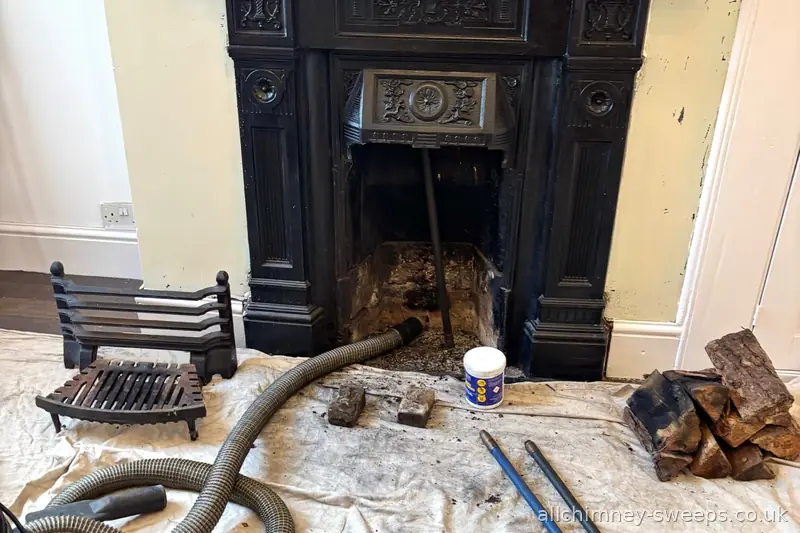
New home buyers survey — Victorian cast iron fireplace, grate removed for full flue inspection, Gidea Park Romford. Written condition report produced. Safe to use confirmed.
Full visual assessment of the firebox, throat, smoke chamber and accessible flue sections. We look for cracks, debris, fallen render and signs of previous chimney fire.
A 200mm core ball is pulled through the flue on a rope to verify diameter and identify any restrictions or offsets. Essential before lining or installing a stove.
Building Regulations Part J smoke evacuation test. Confirms the flue is drawing correctly and smoke is not spilling back into the room. Issued as standard on all inspections.
Written condition report on completion. Clear findings, any remedial recommendations, and confirmation of whether the chimney is safe to use.
A surprising number of people move into a property with a fireplace or stove and simply do not know how to use it. Which wood to burn. How to light it correctly. How to control the air. How often it needs sweeping. Whether the CO alarm needs to be on. These are not stupid questions — they are the right questions.
Part of what we do on every inspection is talk you through exactly what you have and how to use it safely. Fuel type and moisture content. Air controls and draw testing. CO alarm placement and requirements. Fuel storage considerations. Smokeless fuel options for smoke controlled areas. How to light and load your appliance correctly. Sweeping schedule and when to book. Fireguard usage. Smoke and CO alarm requirements. Ventilation — well-insulated rooms reduce available airflow and can affect chimney draw. High output appliances may require additional ventilation to meet Building Regulations Part J. Always follow the manufacturer's installation and ventilation instructions and consult a registered installer. We leave you confident — not guessing.
Victorian cast iron fireplace inspection — new home buyer survey, Gidea Park, Romford. Grate removed, flue inspected and condition assessed. This is the most common inspection we carry out for new homeowners in the older properties across Gidea Park and Emerson Park.
NACS registered sweep answers the question every new homeowner asks — can we use this fireplace? The inspection covers visual assessment of the firebox, throat and flue, smoke draw test and a written condition report. You either get a clear pass, a works-required report, or in rare cases a fire-unsafe notice. Always honest. Always in writing.
Book a Survey
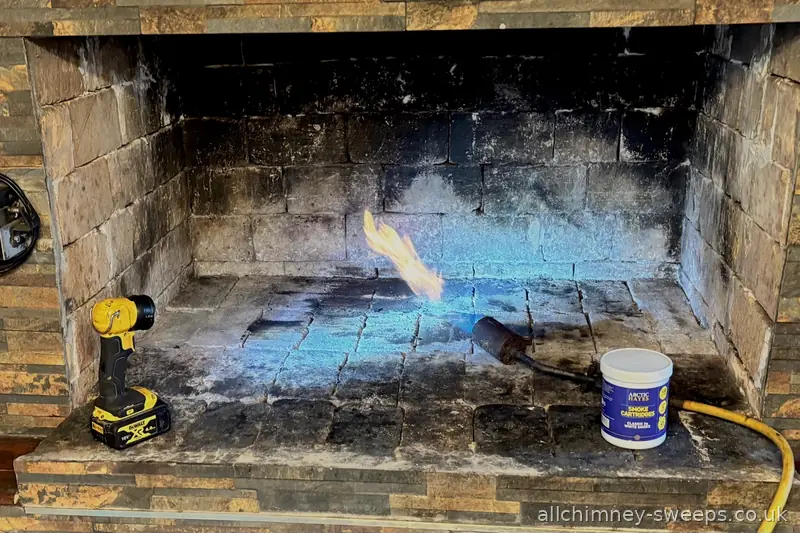
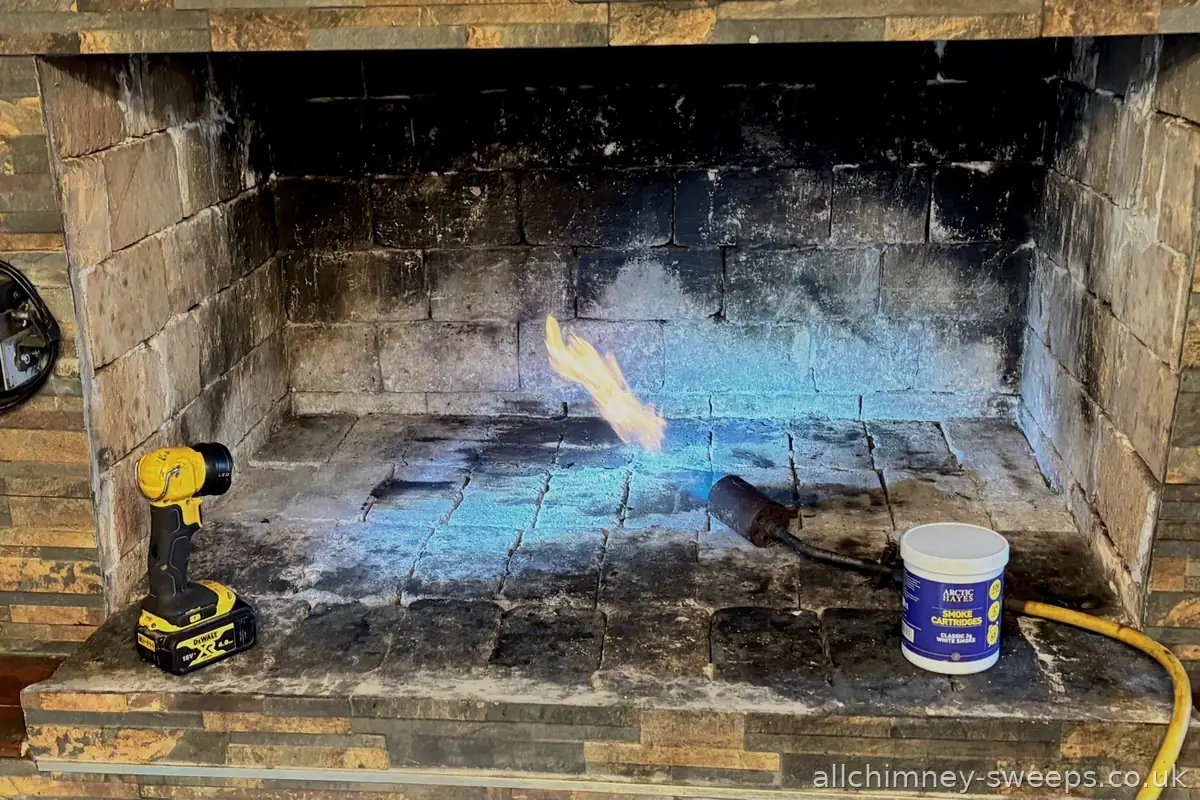
Flame torch used to heat the flue before smoke testing — confirms the flue is drawing correctly before first use.
You have moved into a property with a fireplace or stove. You have never used it. You do not know when it was last swept, whether the flue is clear, or whether it is even safe to light. That is where we come in.
We heat the flue, run a smoke draw test using Arctic Hayes smoke cartridges, and confirm whether combustion gases are evacuating correctly and safely. If the flue is drawing well — you get the all-clear and a written condition report. If it is not — we tell you exactly why and what needs doing.
You will leave knowing exactly what you have, whether you can use it, and how to use it safely. That is the whole point of the inspection.
Decades of trade knowledge — we spot what others miss before it becomes a safety issue.
Book a Smoke Test
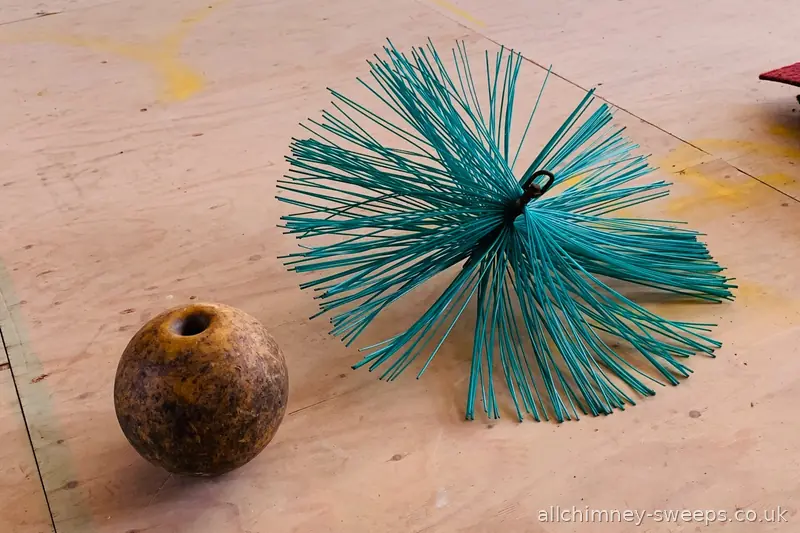
16" stiff bristle brush and 200mm core ball — pulled through the flue on a rope to verify diameter and identify restrictions, Gidea Park Romford.
Most homeowners have never seen a core ball. This 16" stiff bristle sweep brush and 200mm core ball are pulled through the flue on a rope to verify flue diameter and identify any restrictions before lining or inspection work begins.
If you are planning to have a flue liner fitted, or a wood burning stove installed, the flue must first be inspected and measured using the correct tools. A core ball test confirms the flue is clear, identifies any offsets or restrictions, and establishes the correct liner diameter for the installation.
This is not a job for a general tradesman with a brush. It requires the correct equipment and the experience to interpret what you find.
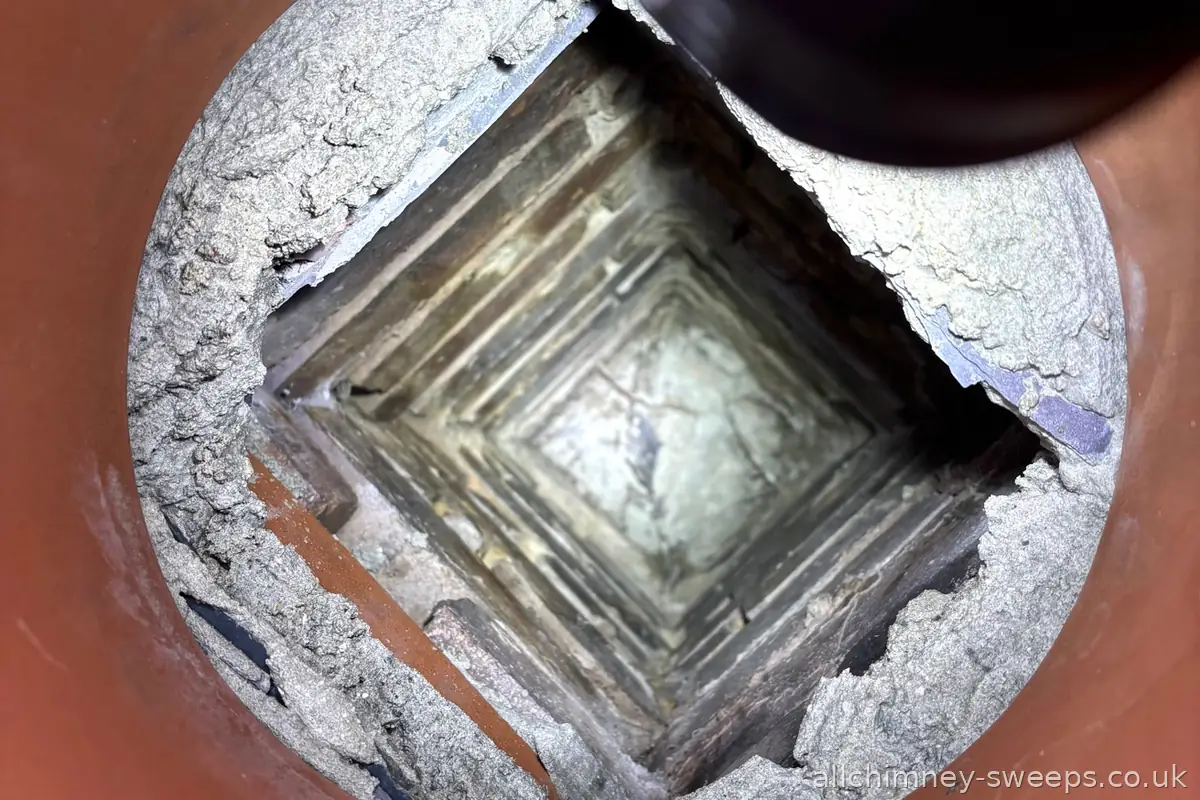
Book a Core Ball InspectionView down the chimney pot during a pre-purchase inspection — nest debris and decayed rendered lining blocking the flue. Clearance and condition report completed before the new owners moved in, Rise Park, Romford.
This is exactly why a chimney inspection should be part of every property purchase in Havering. Solicitors increasingly recommend a chimney survey as part of property transactions. We provide a written condition report suitable for inclusion in purchase documentation. If the chimney is not in a safe and usable condition, we say so — clearly, in writing.
Book Pre-Purchase Survey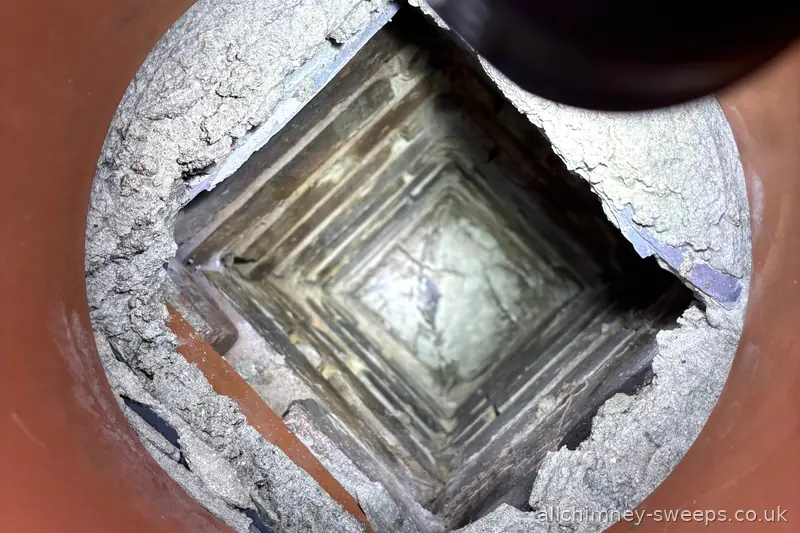
View down chimney pot — nest debris and decayed rendered lining blocking the flue, Rise Park Romford. Pre-purchase inspection revealed this before completion.
Not legally required, but increasingly expected by solicitors and buyers in property transactions. A written chimney condition report from an NACS registered sweep is the standard accepted document. It answers the question before it becomes a negotiation point at exchange.
Not necessarily. A disused chimney can accumulate bird nests, debris, fallen render and cobwebs that fully block the flue. When the property was purchased, there is no guarantee the previous owner used or maintained the chimney correctly. An inspection confirms current condition before first use.
A smoke draw test — Building Regulations Part J — confirms the flue is evacuating combustion gases correctly and that smoke is not spilling back into the room. It is the key safety test carried out on all gas fire installations and all chimney inspections. Without a clear draw test result, any gas engineer or stove installer should not proceed.
Yes. We provide a written NACS condition report on every inspection. This confirms the sweep was carried out by an NACS registered sweep, the flue condition at the time of inspection, and any remedial works identified. This is the standard document accepted by home insurers for solid fuel appliances.
Certificate issued. Same day response. WhatsApp a photo for an instant assessment.